
What is a pinch point?
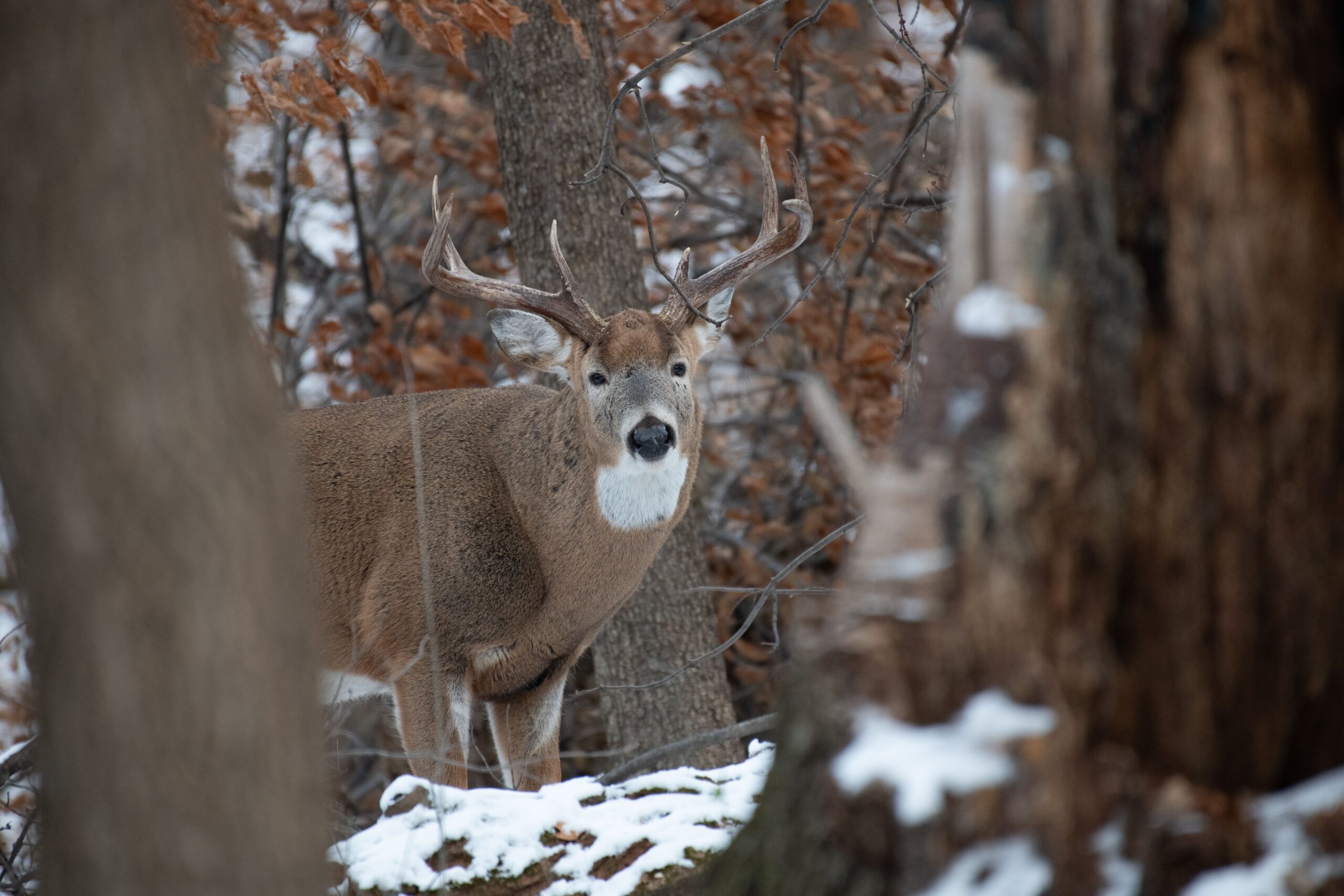
A pinch point is any spot where the land squeezes deer into a narrow path. Terrain, water, cover or a fence line does the work, and deer that could have walked anywhere end up walking past the same tree.
That matters for two reasons. For hunters, a good pinch point is the stand that produces year after year, especially during the rut when bucks cover ground looking for does. For land buyers, pinch points are what separate a tract that holds deer from one that only has deer passing through. When we walk a property with a buyer in the Arkansas River Valley, they’re one of the first things we look for.
Common pinch points on Arkansas land
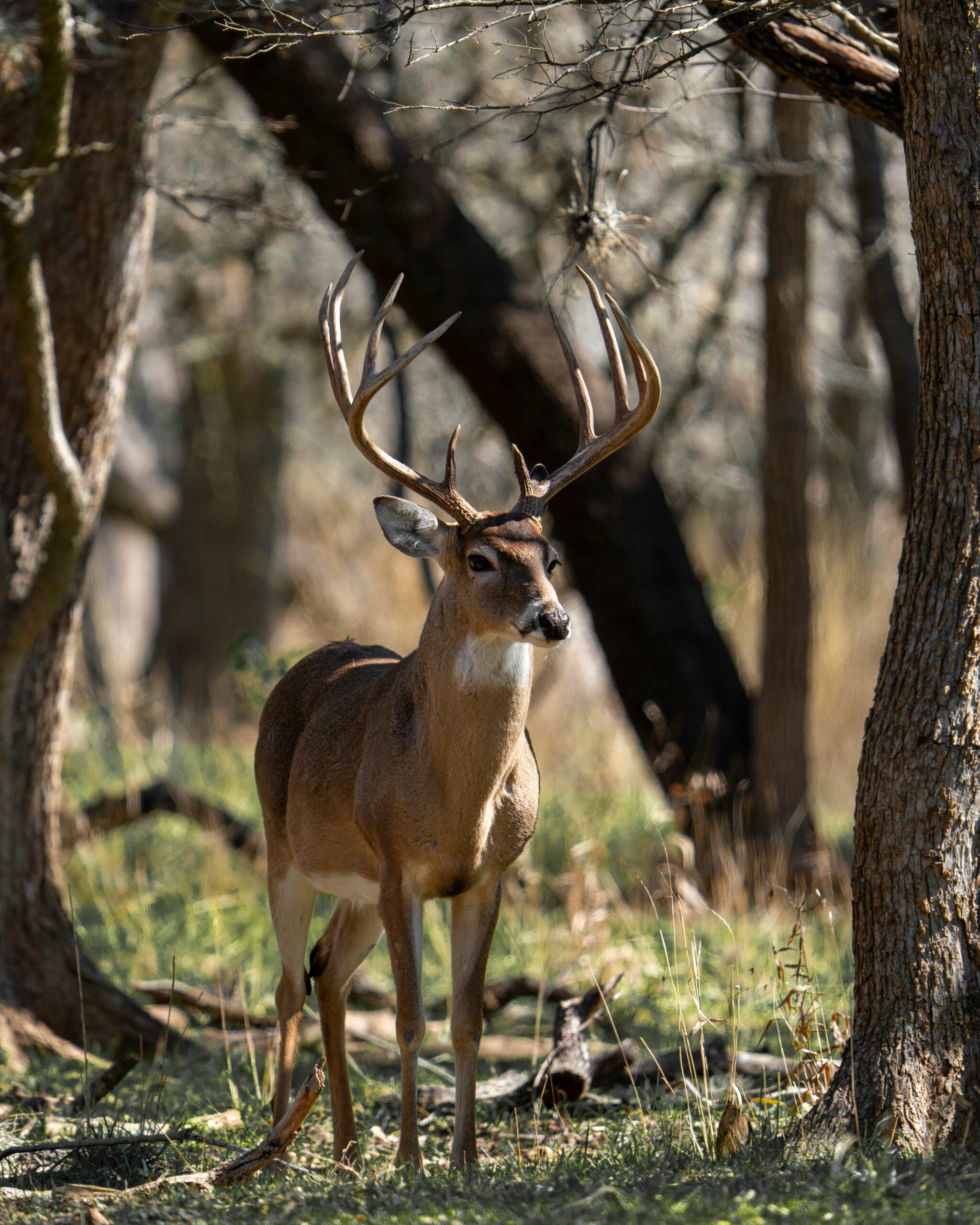
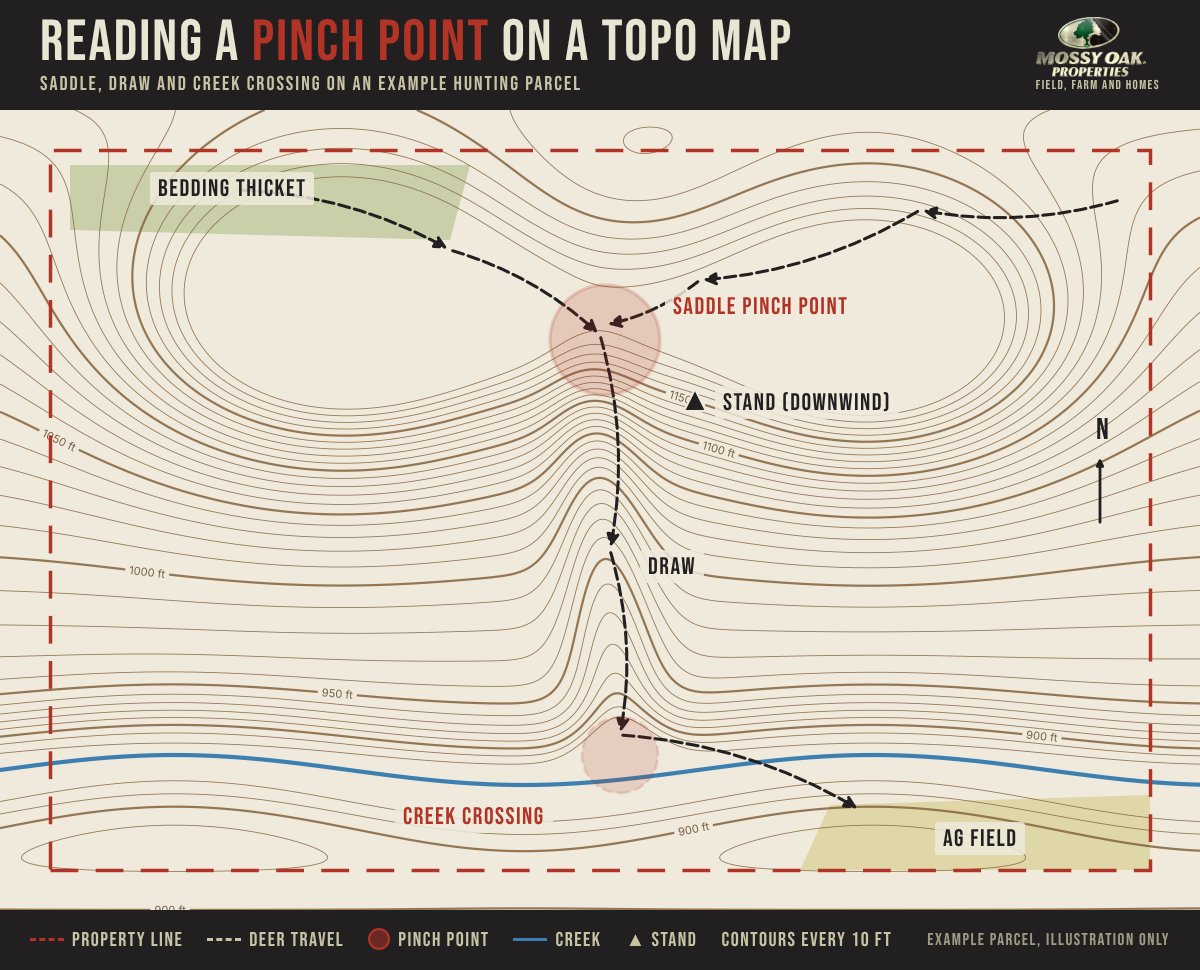
Saddles. A low dip in a ridge line is the easiest way for a deer to cross from one side of a mountain to the other. In the Ozarks and Ouachitas, saddles are some of the most reliable buck crossings there are.
Benches. A flat shelf running along a steep hillside gives deer an easy path that stays below the skyline. Bucks love to travel them, often a third of the way down from the top.
Creek crossings. Deer cross where the banks are low and the water is shallow. A cut bank for 200 yards with one easy crossing turns that crossing into a highway.
Fence and field corners. In River Valley farm country, the inside corner of a field or a gap in a fence row concentrates movement between bedding cover and food.
Strips of cover. A brushy draw, a timber strip between two pastures or a creek bottom running through open ground gives deer a hidden route in daylight.
Edges where habitat changes. The line between a clear-cut and mature timber, or pines and hardwoods, is a natural travel route, especially where two edges meet.

How to find pinch points before you buy
Start with a topo map. Free and low-cost apps like onX Hunt, HuntStand and Google Earth show contour lines. Look for places where contour lines bend into a “U” at the top of a ridge (a saddle), or spread apart on a steep slope (a bench).
Add an aerial view. Satellite imagery shows timber edges, field corners, creek bottoms and strips of cover. Mark every spot where cover narrows or two habitat types meet.
Then walk it. Maps get you close; boots on the ground confirm it. Look for:
- Worn trails that merge from two or three directions
- Rubs and scrapes lined up along a route
- Tracks in the mud at creek crossings
- Low spots in fences where hair is caught in the wire
Late winter and early spring are the best scouting seasons. The leaves are down, last fall’s sign is still visible, and you won’t spook deer before the season. If you are buying now, walk the land with your agent and ask the seller where they have killed deer.
How to hunt a pinch point
- Play the wind first. A perfect funnel is useless if your scent blows across it. Set up downwind of where deer will pass, and have a second stand for the opposite wind.
- Sit off to the side, not on top. Hang your stand 20 to 40 yards from the trail so deer pass within range without walking under you.
- Plan a quiet way in and out. Use a creek bed, a ditch or the back side of a ridge so you don’t cross the travel route on your way to the stand.
- Save it for the right days. Pinch points shine during the rut, when bucks cruise between doe bedding areas. Rut timing varies across Arkansas, but in the River Valley, November is usually the peak. Hunting a stand too often educates deer.
- Run a trail camera. A camera on the funnel tells you when mature bucks are moving through and whether it’s daylight or after dark.
Why pinch points matter when you buy or sell land
For buyers: acreage alone doesn’t tell you how a property hunts. A 60-acre tract with a saddle, a bench and a creek crossing can out-hunt 200 flat acres with nothing to funnel deer. Ask your agent to mark the travel features on the map before you make an offer.
For sellers: if you know where the deer cross, say so. Pinch points, trail camera photos and harvest history are some of the strongest selling points a hunting property has. We feature them in every hunting listing we market.
Frequently asked questions
What’s the difference between a funnel and a pinch point? Hunters use the words interchangeably. Both describe a spot where the land narrows deer movement into a small area.
Can I create a pinch point? Yes. Hinge-cutting trees, planting a screen of switchgrass or leaving a fence gap can steer deer where you want them.
How big does a property need to be to have pinch points? Size matters less than terrain. Even 20 to 40 acres in hill country can have one.
CHECK YOUR ZONE

Looking for land that hunts?
At Mossy Oak Properties Field, Farm and Homes in Barling, we walk the ground before we list it, so we can show you where the deer move. Browse our River Valley hunting properties or call us to talk through what you’re looking for.
